
Working with what we've got
A side hustle confession
Changing economic tides have led me to embrace the life of a business owner with multiple income streams in completely different categories, one of which is flipping secondhand finds on eBay.
I got started in high school, simply because I needed money for things that no one else was going to pay for (good preparation for adulthood, I suppose). I opened my eBay account back in 2004, after using my dad’s for a couple of years because I wasn’t old enough for my own yet. It's the same one I use today.
Hitting up garage sales, estate sales, antique stores, and thrift shops for cool vintage clothing, decor, and knick-knacks is a long-time hobby of mine that also began in my teens, so it naturally turned into a way for me to make some side cash while building up my collection and having fun.
Vintage has always been my specialty, but now I consider myself a generalist with expertise across several categories. As a life-long learner (and anthropologist!), I’m driven by the endless, fascinating knowledge about society, trends, material culture, and history. After selling thousands of items around the world, I’ve learned a lot from every part of the process: sourcing, researching, listing, shipping, and dealing with customers, with plenty of wins and lessons learned.
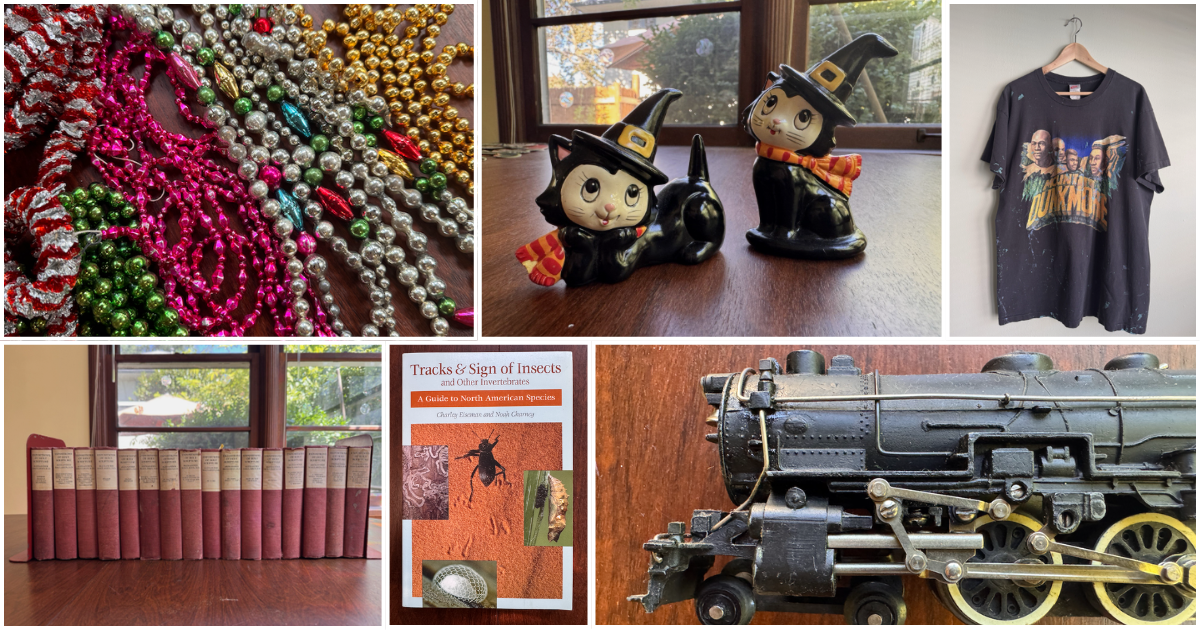
Here are a few of my recent sales, all vintage except the book. For the curious, I paid about $20 for everything featured here, and made a total of $427 (before fees; buyers paid shipping).
My friends wonder how I know that some random ass object is worth a cool hundo, but doing this for 24 years has given me an eye for what sells and how to research nearly anything. Put an object from every decade of the 20th century in front of me, and I can tell you when each one was made, by whom, for what purpose, and whether it’s worth anything and how I know.
I have a confession to make…
I originally posted about this last week on LinkedIn, and afterward I felt pangs of shame for several days, as if someone would read it and think that my reinvented career strategy business was a flop, or that I’m not successful enough to be above selling old stuff on the internet.
That’s my damn inner critic entering the chat, telling me I’m a 40-year-old loser for not following along with society’s definition of success. It’s the same critic that showed up at a dinner party a while back, when a retired multimillionaire doctor (whose kids are, naturally, a doctor and engineer) gazed upon me with pity as I tripped over my words trying to explain that I was starting over with my business after a hard couple of years.
Shame? In this economy?
Here’s a reminder to myself and anyone else trying to make ends meet in this or in any economy: having more than one way to make money is smart, useful, and COOL. It means you’re skilled at adapting to constraints you may not have chosen. And you’re not putting all your eggs in one raggedy basket.
You might prefer to do just one thing for money, especially if you’ve built a career out of it, or you trained hard (or paid dearly) for your skill set. It’s more than fair to want this, but years of mass layoffs to fund AI investments and a trash heap of a job market are making this harder to come by. Perfectly talented people are waiting 6, 12, 18 months or longer to land a standard full-time job, only to get laid off again (and again).
At a certain point, we have to ask what it’s costing us, financially, mentally, and otherwise, to hold out for dwindling prospects. If you have a regular job right now, first count your lucky stars, and then give some thought to how you would support yourself if you lost it tomorrow.
We live in a society that puts the onus on individuals to deal with systemic problems, so we have to look out for ourselves and each other. Right now that means getting creative and getting comfortable with uncertainty as traditional careers and job stability continue to fall apart. It will also require movements to build worker power, stronger safety nets and regulation, and company accountability for treating people as disposable.
And we’ve got to talk more openly about how we actually pay the bills, because the shame festers and the harmful definitions of success thrive when everyone thinks they’re the only one going through it.
